
Preface: Why We Must Speak of Sa’di Now
I had prepared this article a few days ago, but I hesitated to publish it. As I watched the heartbreaking news of the brutal crackdown and loss of life in Iran, writing about 13th-century poetry felt futile. What power do words have when bullets are flying?
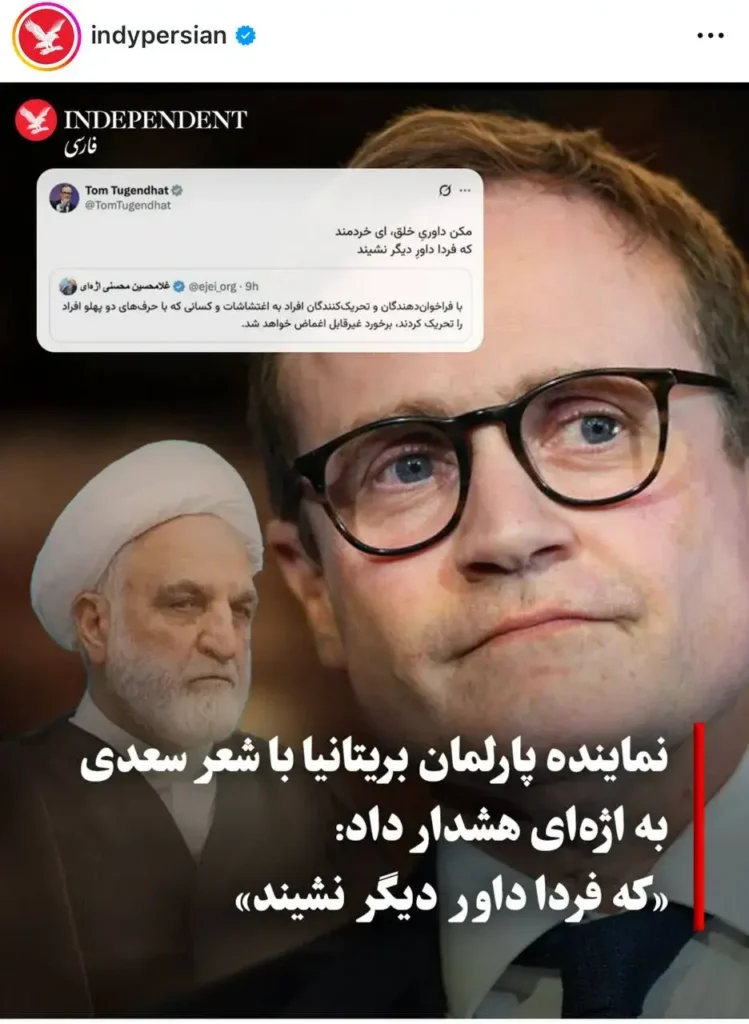
But yesterday (January 11, 2026), that doubt vanished. When UK MP Tom Tugendhat invoked Sa’di’s Boustan to warn the regime’s judiciary
مکُن عیبِ خلق، ای خردمند، فاش
به عیبِ خود از خلق مشغول باش
“Do not reveal the faults of others, O wise one / Be occupied with your own faults” (Source: Sa’di, Boustan, Chapter 7)
it became clear: These are not just old poems. They are the sharpest tools we have to define justice and condemn tyranny.
The article below, which explores five timeless lessons from Saadi on justice and tyranny in Saadi’s Golestan, was written before this week’s events, yet it speaks directly to them. It reminds us that while power may use violence to silence dissent, the wisdom of history has already delivered its verdict on the fate of oppressors.
Time to read:
Table of Contents
Echoes of Wisdom from a Persian Rose Garden
In an era defined by rapid change, complex global challenges, and a constant re-evaluation of leadership paradigms, the quest for enduring wisdom often leads us to unexpected sources. What if the most profound insights into ethical governance, the perils of unchecked authority, and the true nature of leadership could be found not in contemporary management texts, but in the verses and tales of a 13th-century Persian poet?
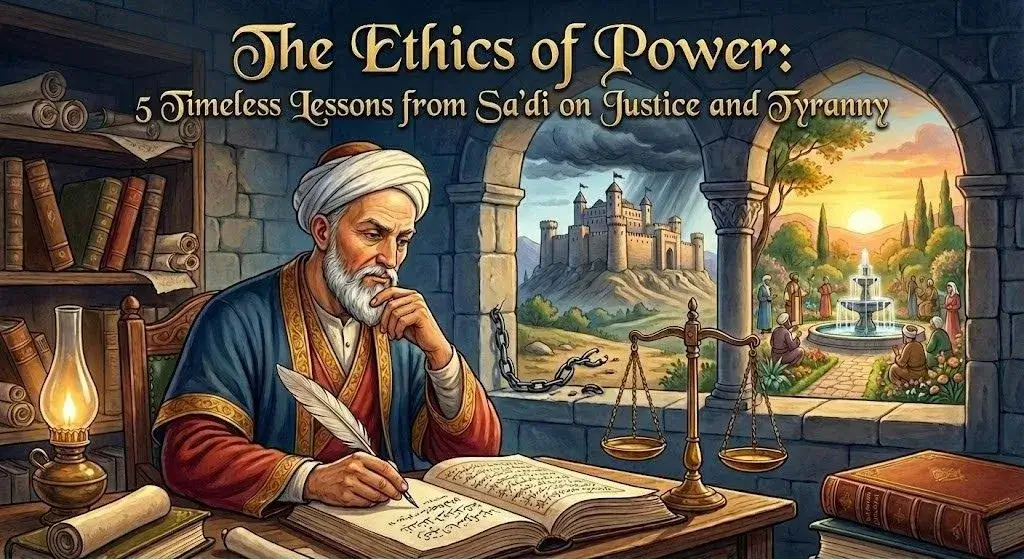
This is precisely the proposition offered by Muslih al-Din Sa’di Shirazi, whose magnum opus, the Golestan (The Rose Garden), remains a vibrant, incisive, and remarkably relevant guide to the human condition, particularly the intricate dynamics of power.
Sa’di, a master of both prose and poetry, crafted the Golestan in 1258 CE, a period of immense upheaval following the Mongol invasions that reshaped the Islamic world. Far from being a detached academic exercise, his work is deeply rooted in observation, experience, and a profound understanding of human psychology.
Chapter 1 of the Golestan, titled “On the Conduct of Kings” (باب اول در سیرت پادشاهان), is a collection of anecdotes, aphorisms, and moral reflections specifically addressed to rulers and those who wield authority. It is a treatise on ethical leadership, a mirror held up to both the virtues and vices inherent in power. For modern leaders grappling with issues of justice, accountability, and the moral compass of governance, Sa’di’s Golestan offers not just historical curiosity, but a wellspring of timeless lessons that resonate with startling clarity.
This article delves into five such lessons drawn primarily from Chapter 1 of the Golestan, exploring how Sa’di’s ancient wisdom provides a unique and powerful lens through which to examine contemporary leadership ethics. We will see that while the trappings of power may change, the fundamental ethical dilemmas faced by those in authority remain remarkably constant.
Lesson 1: The Peril of Tyranny – Power Without Justice is a Fleeting Illusion
Sa’di’s Golestan opens its discourse on kingship with a stark and unwavering condemnation of tyranny. For Sa’di, power divorced from justice is not only morally reprehensible but inherently unstable and ultimately self-destructive. This foundational lesson is powerfully encapsulated in Hekāyat 11 (Story 11), one of the most famous stories from Chapter 1, which recounts the encounter between a fearless dervish and the notorious Umayyad governor, Hajjaj ibn Yusuf.
Hekāyat 11: The Dervish and Hajjaj
Hajjaj ibn Yusuf, a figure synonymous with cruelty and oppression in Islamic history, was known for his ruthless governance. One day, he heard of a dervish whose prayers were said to be unfailingly answered. Intrigued, or perhaps seeking a blessing to legitimize his rule, Hajjaj summoned the dervish and requested a prayer for himself. The dervish, without hesitation or fear, looked Hajjaj in the eye and prayed, “O God, take away his life!” Hajjaj, astonished and enraged, demanded an explanation for such an audacious prayer. The dervish calmly replied, “This is a good prayer for you, and for all Muslims. For your death would bring peace to the world, and justice would prevail.”
This brief anecdote is a masterclass in moral courage and a profound indictment of tyrannical rule. Sa’di uses the dervish as a mouthpiece for divine justice, demonstrating that true spiritual authority fears no earthly power. The dervish’s prayer is not an act of malice, but a declaration that the removal of an unjust ruler is a blessing for all humanity. This story underscores several critical aspects of Sa’di’s philosophy on power:
- The Moral Imperative of Justice: For Sa’di, the primary duty of a ruler is to ensure justice. When a ruler becomes an oppressor, they forfeit their legitimacy and become a burden on society. The dervish’s prayer highlights that the absence of justice under a tyrant is a greater evil than the tyrant’s demise.
- The Illusion of Absolute Power: Hajjaj, despite his vast temporal power, is rendered helpless and exposed by the dervish’s moral authority. This illustrates that even the most formidable tyrants are vulnerable to moral judgment and the collective yearning for justice. Their power, though seemingly absolute, is ultimately fragile because it lacks the foundation of popular consent and divine sanction.
- The Voice of the Voiceless: The dervish, representing the marginalized and the spiritually pure, dares to speak truth to power when others are silenced by fear. This emphasizes the importance of independent voices and moral conscience in holding power accountable, even in the most repressive regimes.
- The Self-Destructive Nature of Tyranny: The dervish’s prayer is framed as a “good prayer” for Hajjaj himself. This suggests that tyranny ultimately corrupts the tyrant, leading to a life devoid of true peace or honor. Death, in this context, is presented as a release from the moral burden of oppression, both for the ruler and the ruled.
Modern Relevance:
In today’s world, leaders often face the temptation to prioritize power consolidation over ethical governance. From authoritarian regimes suppressing dissent to corporate executives engaging in exploitative practices, the allure of unchecked power remains potent.
Sa’di’s lesson from Hekāyat 11 serves as a timeless warning: any leadership that relies on oppression and disregards justice is built on sand. It may appear strong, but it carries the seeds of its own destruction, inviting not blessings, but prayers for its downfall.
Modern leaders must understand that their legitimacy and longevity are not solely determined by their might, but by their commitment to justice and the well-being of those they govern. The dervish’s prayer echoes through centuries, reminding us that true leadership is measured not by the extent of one’s control, but by the depth of one’s moral integrity and service to humanity.
Lesson 2: The Value of Counsel – Wisdom Resides Beyond the Throne
Effective leadership is rarely a solitary endeavor. Sa’di, throughout Chapter 1 of the Golestan, consistently champions the importance of wise counsel, asserting that a ruler’s true strength lies not just in their own judgment, but in their willingness to listen to and act upon the advice of sagacious individuals, regardless of their social standing. This lesson is illuminated by Hekāyat 12 (Story 12), which highlights the folly of an unjust king who dismisses the wisdom of a pious man.
Hekāyat 12: The Unjust King and the Pious Man
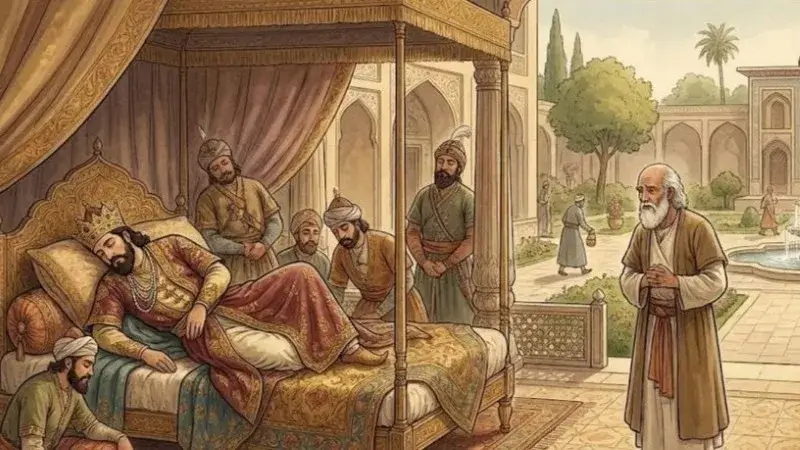
Sa’di recounts the story of an unjust king who asked a pious man, “Of all acts of worship, which is the best?” The pious man replied, “The best act of worship is for you to sleep at noon, so that for that brief period, you may not oppress the people.” The king, displeased by this blunt assessment, retorted, “What is your opinion of me?” The pious man answered, “I see you as a tyrant who takes from the poor to give to the rich, and who builds palaces on the ruins of the oppressed.” The king, angered, ordered him imprisoned.
This narrative, while seemingly simple, carries profound implications for leadership:
- Truth-Telling as a Virtue: The pious man exemplifies the courage required to speak truth to power. His counsel, though unwelcome, is offered for the king’s own good and the welfare of the populace. Sa’di implicitly praises those who prioritize honesty over flattery, even at personal risk.
- The Blindness of Arrogance: The king’s inability to accept criticism, and his subsequent punitive action, reveal the corrosive effect of arrogance on leadership. A leader who surrounds themselves only with sycophants deprives themselves of the vital feedback necessary for effective and ethical governance. The king’s question about the best act of worship was a superficial inquiry; he was not truly seeking self-improvement but validation.
- The Source of True Wisdom: The pious man, despite his lack of worldly power, possesses a wisdom that eludes the king. This reinforces Sa’di’s belief that insight and moral clarity are not exclusive to those in positions of authority or wealth. They can often be found in unexpected places, particularly among those who live by principles of justice and piety.
- The Consequences of Ignoring Counsel: By imprisoning the pious man, the king not only silences a valuable source of truth but also perpetuates his own unjust rule. Sa’di suggests that such actions lead to a leader’s isolation and eventual downfall, as they become increasingly detached from the realities and suffering of their subjects.
Modern Relevance:
In contemporary leadership, the echo chamber effect is a well-documented phenomenon. Leaders, whether in politics, business, or non-profit organizations, can easily become insulated by their inner circles, leading to flawed decisions and a disconnect from their constituents or customers.
Sa’di’s lesson from Hekāyat 12 is a powerful reminder that true leadership demands humility and an active pursuit of diverse perspectives. Leaders must cultivate an environment where dissenting voices are not just tolerated but actively encouraged.
The ability to listen to uncomfortable truths, to value wisdom over flattery, and to seek counsel from those outside one’s immediate sphere of influence is paramount for navigating complex challenges and ensuring ethical decision-making. A leader who silences criticism ultimately silences their own path to improvement and risks repeating the mistakes of the unjust king.
Lesson 3: Justice Over Might – The Enduring Power of Equity
While military strength and economic might may secure a ruler’s position in the short term, Sa’di argues that true and lasting power is built upon the bedrock of justice and compassion. This principle is a recurring theme in Chapter 1, emphasizing that a leader’s legacy is not defined by their conquests but by the equity and well-being they foster among their people. Hekāyat 19 (Story 19) beautifully illustrates this by presenting the exemplary conduct of Anushirvān the Just (Khosrow I), a Sasanian king renowned for his fairness.
Hekāyat 19: Anushirvān the Just and the Roasted Game
It is recounted that Anushirvān the Just (Khosrow I) was once out hunting. When it was time for a meal, some roasted game was brought to him. There was no salt. A servant was dispatched to a nearby village to fetch some. Anushirvān, observing this, said, “Buy the salt, and do not take it by force, lest it become a custom, and the village be ruined.” His ministers, surprised, asked, “What harm could come from such a small amount of salt?” Anushirvān replied, “The foundation of tyranny in the world was initially a small injustice. Every newcomer added to it, until it reached its present magnitude. If the king eats one apple from a peasant’s garden, his servants will uproot the whole tree. If the king takes five eggs by force, his soldiers will put a thousand fowls on the spit.”
This story, though seemingly about a trivial matter, reveals profound insights into Sa’di’s understanding of justice and leadership:
- The Ripple Effect of Injustice: Anushirvān’s wisdom lies in his foresight. He understands that even the smallest act of injustice, if perpetrated or condoned by those in power, can set a dangerous precedent. It normalizes wrongdoing and creates a culture where subordinates feel empowered to commit greater abuses, ultimately leading to systemic corruption and the ruin of the populace.
- Leadership by Example: The king’s refusal to take even a pinch of salt without payment serves as a powerful example for his entire administration. It demonstrates that justice is not merely a set of laws but a lived principle that must be upheld at every level, starting from the top. A leader’s actions, no matter how minor, have immense symbolic weight and shape the ethical climate of their organization or state.
- Protecting the Vulnerable: Anushirvān’s concern for the potential ruin of the village highlights a leader’s responsibility to protect the most vulnerable members of society. He recognizes that the cumulative effect of small injustices disproportionately harms those with the least power, leading to widespread suffering and instability.
- The Foundation of Lasting Rule: By prioritizing justice in even the smallest matters, Anushirvān ensures the long-term stability and prosperity of his kingdom. Sa’di implies that a just ruler earns the loyalty and trust of their people, which is a far more robust foundation for power than coercion or fear.
Modern Relevance:
In contemporary leadership, the concept of “small injustices” often manifests in subtle forms of exploitation, negligence, or the bending of rules for convenience. From corporate cultures that tolerate minor ethical breaches to political systems where petty corruption is overlooked, the cumulative effect can be devastating.
Saadi’s lesson from Anushirvān is a potent reminder that ethical leadership requires constant vigilance against the erosion of justice, starting with seemingly insignificant actions. Leaders must foster a culture of integrity where fairness is non-negotiable, and where every decision, no matter how small, is weighed against its potential impact on the most vulnerable. The enduring power of equity, as demonstrated by Anushirvān, lies in its ability to build trust, ensure stability, and create a truly sustainable and prosperous environment for all.
Lesson 4: True Wealth and Leadership – Beyond Material Accumulation
Sa’di consistently distinguishes between material wealth and true spiritual or moral richness, particularly in the context of leadership. For him, a ruler’s greatness is not measured by the size of their treasury or the opulence of their palace, but by their character, their generosity, and their ability to inspire rather than merely command. This lesson is vividly portrayed in Hekāyat 36 (Story 36), which contrasts the lives of two brothers.
Hekāyat 36: The Two Brothers – The King’s Servant and the Laborer
There were two brothers, one of whom served the king, and the other earned his bread by the strength of his arm. The king’s servant once said to his brother, “Why do you not serve the king, so that you may be relieved from the hardship of labor?” The brother replied, “Why do you not work, so that you may be relieved from the disgrace of service? For I would rather knead dough with the strength of my arm and eat it, than stand with folded arms before a tyrant and beg for my bread.”
This story, while seemingly a simple dialogue, offers profound insights into Sa’di’s view of true wealth and its implications for leadership:
- Dignity of Labor vs. Disgrace of Service: The laborer’s response champions the dignity of self-sufficiency and honest work over the perceived disgrace of serving an unjust ruler. This implies that true wealth is not merely financial, but includes freedom, self-respect, and moral independence. A leader who demands subservience rather than earns respect diminishes both themselves and their followers.
- Moral Independence as True Riches: The laborer, despite his poverty, possesses a moral independence that the king’s servant lacks. He is free from the need to flatter, compromise his principles, or endure the whims of a tyrant. This moral freedom is presented as a form of wealth far superior to the material comforts gained through royal service.
- The Leader’s Responsibility for Moral Environment: The story implicitly critiques a leadership style that fosters a culture of sycophancy and dependence. A truly great leader should inspire their subjects to be productive, independent, and morally upright, rather than creating a system where their dignity is compromised for sustenance.
- Generosity and Character: While not explicitly stated in this hekāyat, Sa’di’s broader philosophy suggests that a leader’s true wealth lies in their generosity, compassion, and the positive impact they have on their people. Material accumulation, if achieved through oppression or used for selfish ends, is ultimately a sign of moral poverty.
Modern Relevance:
In contemporary leadership, the pursuit of material wealth and corporate power often overshadows ethical considerations. Leaders are frequently judged by their ability to maximize profits or expand their influence, sometimes at the expense of employee well-being, environmental sustainability, or social justice.
Sa’di’s lesson from the two brothers challenges this narrow definition of success. It reminds modern leaders that true leadership is not about accumulating personal wealth or demanding unquestioning loyalty, but about fostering an environment where individuals can thrive with dignity and purpose.
A leader who prioritizes the moral independence and well-being of their team or constituents over their own aggrandizement will command genuine respect and build a far more resilient and ethical organization. The laborer’s defiant independence serves as a powerful reminder that the most valuable assets a leader can cultivate are trust, integrity, and a shared commitment to a higher moral purpose.
Lesson 5: The Ephemeral Nature of Power – Humility in the Face of Transience
One of Sa’di’s most profound and frequently reiterated lessons is the transience of worldly power and the inevitability of death. This perspective is not meant to induce fatalism, but rather to instill humility and a sense of moral urgency in those who govern. If power is fleeting, then its exercise should be guided by principles that will endure beyond one’s reign. Hekāyat 41 (Story 41) offers a poignant reflection on this theme through the legendary figure of Alexander the Great.
Hekāyat 41: Alexander the Great and the Eastern and Western Lands
Alexander the Great was asked, “By what means did you conquer the lands of the East and West?” He replied, “By not oppressing the people of any land, and by not delaying the punishment of the oppressors.”
While this particular hekāyat focuses on the means of conquest (justice and swift punishment of oppressors), the broader context of Sa’di’s work, and indeed the very nature of Alexander’s historical legacy, underscores the transient nature of even the most formidable empires. Sa’di often juxtaposes the fleeting glory of kings with the enduring legacy of good deeds and moral character. Other verses and tales in the Golestan, as well as his broader poetic works, explicitly address this:
“The world, O brother, remains for no one. Set your heart on the Creator, not on creation.” Hekāyat 1 (Story 1)
“A lasting good name is far more valuable than leaving behind a gilded palace of gold.”
è Minimalist version: “Better a legacy of a good name than a mansion decorated in gold.” Sermons of Sa’di, Qasida 28
This sentiment, woven throughout the Golestan, offers several insights for leaders:
- The Impermanence of Authority: No matter how vast an empire or how absolute a leader’s control, power is ultimately temporary. Thrones crumble, dynasties fall, and even the greatest conquerors eventually face mortality. This awareness should temper arrogance and encourage a focus on actions that have lasting positive impact.
- Legacy Over Immediate Gain: If power is transient, then a leader’s true measure lies in their legacy. Sa’di urges rulers to prioritize good deeds, justice, and the welfare of their subjects, as these are the only things that will secure a favorable remembrance after their death. Alexander’s answer, in this light, can be interpreted as a reflection on what truly makes a conquest meaningful and lasting – not just territorial gain, but the establishment of a just order.
- Humility as a Virtue: The recognition of one’s own mortality and the fleeting nature of power should cultivate humility. A humble leader is less likely to abuse their authority, more open to counsel, and more inclined to serve rather than dominate. This humility is a bulwark against the corrupting influence of power.
- Moral Accountability: The transient nature of earthly power implies a higher, eternal accountability. Sa’di, writing from an Islamic perspective, often reminds rulers that their actions will be judged not only by history but by God. This spiritual dimension adds another layer of ethical imperative to leadership.
Modern Relevance:
In today’s fast-paced world, leaders are often pressured to focus on short-term gains, quarterly reports, and immediate political victories. The cult of personality and the pursuit of endless growth can obscure the long-term consequences of decisions.
Sa’di’s lesson on the ephemeral nature of power serves as a vital counter-narrative. It challenges modern leaders to look beyond immediate gratification and consider their enduring legacy. What kind of world are they building? What principles will outlast their tenure? By embracing humility and focusing on sustainable justice and the well-being of their communities, leaders can transcend the fleeting nature of their positions and leave a truly lasting, positive mark. The wisdom of Alexander, as interpreted by Sa’di, suggests that even in the pursuit of ambition, justice and the avoidance of oppression are the only paths to a meaningful and remembered reign.
Conclusion: Sa’di’s Enduring Blueprint for Ethical Leadership
Sa’di’s Golestan, particularly Chapter 1, offers a profound and remarkably prescient blueprint for ethical leadership that transcends the centuries. His tales, though rooted in 13th-century Persia, speak directly to the universal challenges of power, justice, and human nature.
From the stark warning against tyranny embodied by the dervish and Hajjaj, to Anushirvān’s meticulous commitment to justice, the value of independent counsel, the humility demanded by the transience of power, and the profound distinction between material and moral wealth, Sa’di provides a comprehensive framework for leaders who aspire to more than mere command.
In a world where leadership is often defined by metrics of success that overlook ethical foundations, Sa’di reminds us that true authority stems from moral integrity, a commitment to justice, and a deep-seated humility. His wisdom encourages leaders to cultivate an environment where truth can be spoken, where small injustices are not tolerated, and where the dignity of every individual is upheld. The Golestan is not just a historical text; it is a living testament to the enduring power of ethical principles in shaping societies and inspiring generations.
 Add as a preferred source on Google
(Click the link and check the box next to our name)